Heat management is a critical engineering factor in LED strip performance. Although LEDs are highly efficient, part of the electrical energy used by LED chips is still converted into heat. The way that heat is generated, transferred, and dispersed depends heavily on the internal structure of the strip.
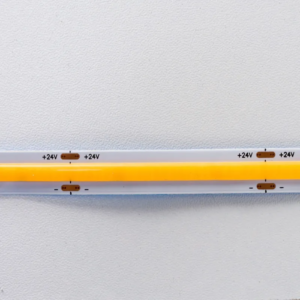
The difference between COB and SMD technology is not only visible in the lighting effect. It also changes the thermal behavior of the product. A COB LED strip uses a chip-on-board structure that integrates multiple LED chips directly onto the circuit board, creating a different heat distribution pattern compared with individually packaged SMD LEDs.
Designed around the principles of uniform light output and reliable operation, our COB lighting solutions demonstrate how thermal management influences LED strip performance. A clear understanding of COB heat control mechanisms enables lighting professionals to choose the most suitable COB LED strip for projects that demand consistent results.
The Heat Path Inside an LED Strip Starts With Chip Packaging
Every LED strip has a thermal path that begins at the LED chip. During operation, the chip produces heat that must move away from the light-emitting area to maintain stable performance.
In an SMD LED strip, each LED chip is placed inside an individual package before being mounted onto the PCB. The package provides protection and electrical connection, but it also creates a separate structure around each heat source.
COB technology changes this arrangement. Instead of placing individual packaged LEDs at intervals, COB manufacturing mounts multiple LED chips directly onto the PCB surface and covers them with a phosphor layer.
This direct connection creates a shorter route between the LED chips and the circuit board. Since the PCB becomes a more integrated part of the heat transfer path, heat can be distributed across a larger surface area rather than remaining concentrated around separate LED packages.
Thermal performance still depends on the entire strip design, including PCB material, power input, installation environment, and operating conditions. The packaging structure is one important factor within that system.
Why SMD Strip Structures Can Create More Concentrated Heat Points
SMD strips rely on individual LED packages arranged along the strip. Each package functions as a separate light source, meaning heat is generated at multiple specific locations.
As LED density increases, the distance between these components becomes smaller. Higher brightness requirements may require more electrical power, which can increase heat accumulation around individual LED packages.
The separated structure of SMD technology can create localized temperature differences because each LED package has its own thermal pathway. Heat must move from the LED chip through the package material before reaching the PCB.
This does not mean SMD strips cannot manage heat effectively. Properly designed SMD products can provide reliable performance when matched with suitable power levels and installation conditions.
However, compared with a COB LED strip, traditional SMD structures generally have more individual thermal points because each LED package acts as a separate heat source.
How COB Technology Creates a More Balanced Thermal Surface
The main thermal difference of COB technology comes from the relationship between the LED chips and the circuit board.
Because COB places multiple chips directly on the PCB, its integrated structure can provide a more continuous thermal path. However, actual thermal performance depends on PCB construction, power density, installation surface, airflow, and operating conditions. The absence of individual LED packages reduces the number of separate thermal barriers between the chip and the PCB.
This creates a more continuous thermal surface along the strip. Instead of many isolated heat points, the strip operates as a more integrated lighting structure.
The same design characteristic that produces a smoother lighting appearance also contributes to thermal consistency. COB strips eliminate the visible gaps between individual LED packages, while the integrated layout helps create a more uniform distribution of operating temperatures.
At Aiyu, our AYCob 480D 24V 8mm product uses COB technology to provide continuous illumination from a compact flexible strip format. The product design focuses on achieving consistent light output for applications where a smooth lighting appearance is required.
Why Heat Distribution Affects Long-Term LED Strip Stability
Temperature control influences how consistently LED components operate over time. Excessive heat concentration can place additional stress on electronic components and may affect optical performance.
A strip with more balanced heat distribution can maintain a more stable operating environment across its length. This is especially relevant for installations where lighting operates for extended periods or where replacing installed strips would create maintenance difficulties.
COB technology does not remove all thermal challenges. The final temperature of an LED strip depends on factors such as installation surface, surrounding airflow, power supply quality, and operating conditions.
For this reason, thermal management should be viewed as a combination of product design and correct application. COB architecture provides a foundation for improved heat distribution, while proper system design ensures the strip operates within suitable conditions.
How Aiyu Uses COB Design for More Consistent LED Strip Performance
The thermal difference between COB and SMD strips comes from their internal construction. SMD designs use separate LED packages that create individual heat sources, while COB technology integrates multiple chips directly onto the PCB to create a more continuous heat transfer structure.
For lighting projects requiring smooth illumination and stable operation, understanding this structural difference helps designers choose more suitable LED strip technology.
Through continuous refinement of COB technology, we at Aiyu develop flexible LED lighting solutions that integrate optical consistency, space-efficient design, and effective thermal management. Our COB LED strip products support projects that require uniform illumination and dependable long-term performance.
By evaluating how heat moves through different LED strip structures, project teams can make more informed decisions and select lighting solutions that better match their operational requirements.