How Our LED Strip Solutions Support Modern Architectural Lighting Designs
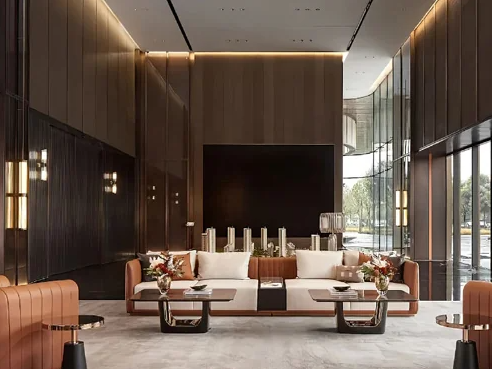
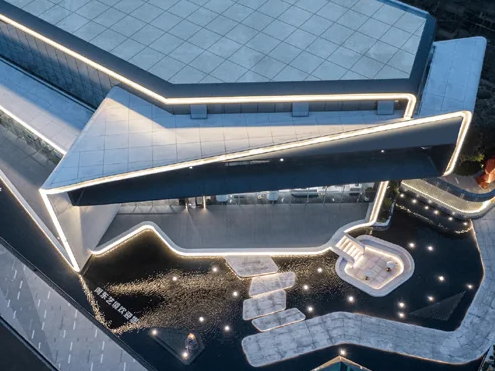
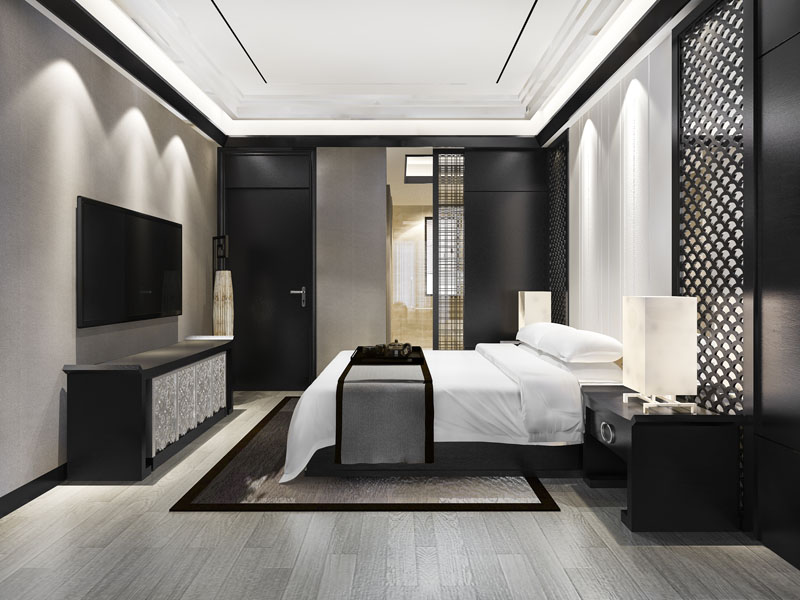
In architectural lighting projects, the selection of linear light sources directly influences how surfaces, structures, and spatial layers are perceived. At Aiyu, we work with lighting solutions designed for stable performance in building environments such as façades, corridors, commercial interiors, and hospitality spaces.
In many of these projects, we are often positioned as a led strip supplier supporting contractors and designers who need consistent optical output and adaptable installation formats across different building conditions.
Architectural Lighting Requirements in Real Projects
Architectural lighting is not only about brightness but also about integration with materials and structural lines. We observe that designers often prioritize uniform light distribution, color consistency, and installation flexibility. In commercial buildings, lighting must also align with maintenance access and long operating cycles, especially in concealed or elevated areas where replacement is not frequent.
At Aiyu, we approach these requirements by focusing on system stability and compatibility with common installation channels used in façade grooves, ceiling coves, and wall transitions.
Led Strip Supplier Approach in Project-Based Supply
As a led strip supplier, we focus on supplying products that can be used in continuous architectural runs rather than isolated decorative segments. This includes ensuring consistent binning control for LED chips, stable PCB structure, and reliable adhesive backing suitable for long installation paths.
In many hotel and retail projects, lighting continuity is essential because uneven color temperature or brightness breaks the visual flow of architectural lines. Our supply process is therefore aligned with project-based procurement rather than retail-level purchasing patterns.
Product Structure and Electrical Design Considerations
One of the practical aspects in architectural applications is voltage selection. We provide LED strip systems in 12V, 24V, and 220V configurations to match different installation scales. Lower voltage options are often used in indoor furniture lighting or short-distance runs, while higher voltage systems support longer continuous installations with reduced voltage drop.
In façade or large corridor projects, electrical stability becomes critical, especially when lighting runs exceed standard segment lengths. This is where proper circuit design and thermal management become essential.
Integration of Aiyu LED Strip Solution in Building Systems
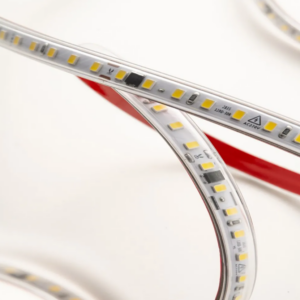
Within our product line, we include an IP65-rated 220V 8mm LED strip model using 2835 LED chips with 120 LEDs per meter and a free-drive structure. This design reduces dependency on external drivers in certain installation scenarios, simplifying on-site wiring for contractors.
The IP65 protection level supports use in semi-outdoor environments such as sheltered building edges or entrance corridors where humidity and dust exposure may occur. In architectural applications, this balance between protection and installation efficiency is often required.
Led Strip Supplier Role in Consistent Optical Performance
When acting as a led strip supplier, we also focus on optical uniformity across production batches. In architectural lighting, even slight variations in color temperature or brightness can become visible across long linear installations.
To address this, we apply controlled production processes that stabilize LED selection and ensure consistent diffusion performance. This is particularly relevant in hospitality lighting, where ambient tone consistency contributes to spatial comfort and visual coherence.
Installation Flexibility in Commercial Architecture
Architectural lighting often requires flexible installation methods, including recessed mounting, aluminum channel integration, and surface adhesion. Our LED strip systems are designed to support these approaches through standardized width options and compatible accessories.
In retail environments, lighting layouts may change during store redesigns. Therefore, ease of replacement and modular installation becomes a practical advantage for long-term operational use.
Thermal Management and Long-Term Operation
Heat control is a key factor in LED strip lifespan, especially in enclosed architectural structures. We consider PCB thickness, copper trace distribution, and installation spacing to support heat dissipation during continuous operation.
In hotel corridors and commercial ceilings, lighting systems may operate for long hours daily. Stable thermal performance helps maintain luminous efficiency over time without frequent maintenance interventions.
System Compatibility with Modern Building Design
Modern architecture often integrates lighting with smart building systems, including centralized control and zoning functions. Our LED strip products can be paired with compatible control systems depending on project requirements, allowing adjustments in brightness and scheduling.
This flexibility supports designers who aim to create layered lighting scenes rather than static illumination, especially in commercial interiors and exhibition spaces.
Application in Façade and Interior Transition Zones
Transition zones such as entrances, corridors, and façade edges require lighting that defines spatial direction without overwhelming the architectural structure. Linear lighting is commonly used to guide movement and highlight structural lines.
Our solutions are frequently used in these zones to create visual continuity between exterior and interior spaces while maintaining design simplicity.
Procurement and Project Collaboration Model
In B2B projects, lighting procurement often involves coordination between contractors, designers, and electrical engineers. We support this workflow by providing technical documentation and product consistency suitable for bulk installation planning.
Rather than focusing on single-unit sales, our role is aligned with project delivery cycles, where timing, stability, and repeatability are important factors in execution.
Conclusion: Alignment Between Lighting Systems and Architecture
Architectural lighting requires a balance between visual effect, structural compatibility, and long-term stability. Through Aiyu’s product development and supply experience, we focus on supporting these requirements across different project scales.
As a led strip supplier, we continue to refine our systems to match evolving architectural design needs, including improved installation efficiency and stable optical output across extended applications.