In B2B lighting projects, selecting a stable partner for strip lighting is often tied to long-term project consistency rather than a single purchase decision. At Aiyu, we approach this topic from years of manufacturing experience in LED strip systems for engineering, hospitality, and residential integration projects.
Many buyers initially focus on price, but operational stability, technical compliance, and production capability often define whether cooperation remains smooth across multiple project cycles. Understanding how a led strip supplier operates behind the product becomes a practical starting point for procurement teams.
Manufacturing Stability and Production Structure
One of the first indicators we suggest evaluating is production stability. A qualified led strip supplier should operate with controlled assembly lines, standardized testing, and repeatable output quality.
At Aiyu, our production system includes automated SMT placement and aging tests for LED strips, helping reduce variation between batches. This is particularly important for large engineering installations where color temperature consistency and voltage stability affect the final lighting experience across different building zones.
Electrical Design and Free-Driver Compatibility
Electrical configuration plays a central role in engineering safety and installation efficiency. In many projects, installers prefer simplified wiring systems that reduce external driver dependencies.
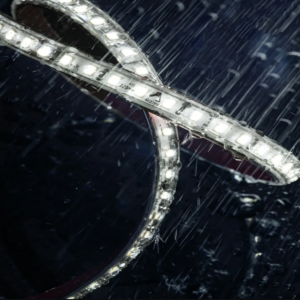
Our led strip supplier approach includes designing compatible solutions that reduce installation complexity while maintaining stable output performance. For example, our AY2835-120D-220V-8mm-IP65, free-drive LED strip integrates a direct 220V input structure, which can help reduce the need for additional driver units in selected installation environments, especially in long-distance lighting layouts.
Product Structure and Real Application Scenarios
Beyond electrical design, structural durability is another key consideration. Outdoor and semi-outdoor installations often require protection against moisture and dust. Within Aiyu, product development focuses on balancing flexibility with environmental resistance.
The IP65-rated sealing structure used in selected models supports applications in hotel facades, corridor lighting, and architectural outlining. A reliable led strip supplier typically aligns product engineering with these real installation scenarios rather than offering a one-size-fits-all configuration.
Consistency in Color and Optical Performance
Lighting consistency across long runs is essential in commercial environments. Variations in color temperature or brightness can affect visual uniformity in retail or hospitality spaces.
We maintain binning control systems to ensure consistent LED selection during production. This allows project planners to implement continuous lighting layouts without noticeable color shifts.
In practical procurement, buyers often evaluate whether a supplier can maintain this consistency across repeated orders rather than only within a single batch.
Integration with Engineering Projects
In B2B projects, LED strips rarely function as standalone products. They are integrated into ceilings, signage systems, or architectural profiles. A professional led strip supplier should therefore support integration planning.
At Aiyu, we often collaborate with lighting designers and contractors to adjust strip length, voltage configuration, and mounting methods based on project drawings. This cooperation reduces installation adjustments on-site and improves construction efficiency in time-sensitive projects.
Case-Oriented Product Example
To illustrate application-oriented design, the AY2835-120D-220V-8mm-IP65 free-drive LED strip is built for continuous linear lighting in architectural environments. It is designed for scenarios where long-distance illumination is required without frequent power injection points.
In our experience as a led strip supplier, such configurations are commonly used in hotel corridors, commercial outlines, and decorative structural lighting where visual continuity is prioritized over segmented installation.
Quality Testing and Compliance Practices
Quality assurance systems are another major factor in supplier selection. At Aiyu, each production batch undergoes aging tests, voltage verification, and waterproof structure inspection before shipment.
This reduces risks during large-scale installation projects. A dependable led strip supplier is often evaluated not only by certifications but also by internal quality control consistency across time, especially when supplying recurring construction projects or multi-phase developments.
Supply Capability and Project Scalability
Large projects often require phased delivery schedules rather than single shipments. We structure our production planning to support staggered orders while maintaining specification consistency. This allows contractors to coordinate installation progress with material supply. For procurement teams, scalability ensures that lighting systems remain uniform even when projects expand or extend into new construction phases.
Technical Support and Communication Efficiency
Beyond manufacturing, communication efficiency plays a significant role in B2B cooperation. Engineering teams often require quick clarification on voltage selection, installation distance, or waterproof rating suitability.
At Aiyu, our technical support team works closely with distributors and project contractors to provide application-oriented guidance. This reduces misalignment between design expectations and on-site implementation.
Sustainability and Material Selection Awareness
Modern procurement teams are increasingly attentive to material selection and production sustainability. While LED strip systems are generally energy-efficient, differences still exist in housing materials, PCB design, and thermal control.
A responsible led strip supplier should be able to explain these material choices clearly. Our production process focuses on stable thermal management design to support longer operational lifespan in continuous-use environments.
Conclusion: Balancing Technical and Practical Procurement Factors
Choosing a reliable LED strip partner is ultimately a balance between technical capability, production stability, and project adaptability. At Aiyu, we position our role as a manufacturing partner supporting engineering-driven lighting projects rather than simple product distribution.
When evaluating suppliers, B2B clients benefit from focusing on system consistency, installation practicality, and long-term supply reliability rather than isolated product features alone. A structured evaluation process helps ensure smoother execution across different project stages and lighting applications.