At Aiyu, we approach complex lighting projects from an engineering and system integration perspective rather than a purely product-based view. Our work in LED strip lighting for B2B applications involves coordinating electrical stability, optical performance, installation environments, and long-term maintenance requirements.
Since 2005, our company has developed production capabilities across 12V, 24V, and 220V lighting systems, supported by automated manufacturing lines and structured quality control processes. This foundation allows us to participate in projects where lighting performance must remain stable across architectural, commercial, and outdoor environments without compromising installation efficiency or safety.
Project Requirement Analysis in System-Level Lighting Design
In early-stage project consultation, we often evaluate electrical load conditions, installation distances, and environmental exposure before recommending a solution. In this stage, led strip supplier coordination is not limited to product selection but extends to system compatibility planning.
We analyze whether the lighting path requires high-voltage direct input or low-voltage distributed power layouts, ensuring alignment with project engineering drawings and on-site constraints. This reduces rework during installation and supports smoother integration with building electrical systems.
Optical Stability and Circuit Architecture Control
Lighting consistency is closely related to circuit design and LED density configuration. We focus on maintaining uniform brightness across long-distance installations by controlling current distribution within each strip segment.
This includes evaluation of resistive loss and thermal behavior under continuous operation. As part of our engineering workflow, we ensure that system design decisions are validated through internal testing rather than theoretical estimation, which is especially important in commercial lighting projects where visual continuity is required.
High-Voltage Direct Drive Application Capability
For large-scale installations requiring simplified wiring structures, we utilize 220V direct input solutions that reduce dependence on external drivers.
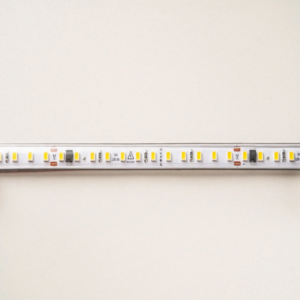
One of our referenced products, the AY2835-120D-220V-8mm-IP65-free-drive LED strip, demonstrates this approach by integrating a direct-drive structure designed for simplified installation pathways.
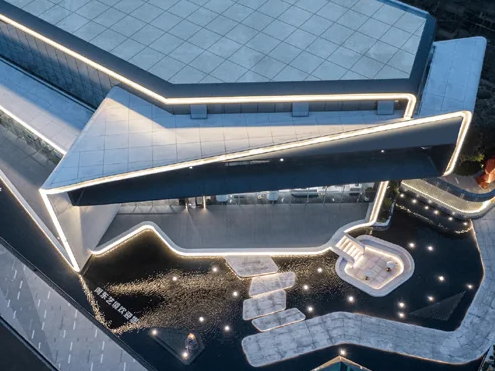
This type of configuration is often selected in long-distance façade lighting or linear architectural outlines where minimizing auxiliary components is necessary for maintenance efficiency.
Outdoor Protection and Environmental Engineering
Environmental adaptability is a critical part of our engineering validation process. We evaluate dust, humidity, and water exposure levels when designing lighting systems for outdoor or semi-outdoor environments.
Products with IP65 protection levels are commonly used in these conditions, helping maintain stable operation under rain or dust exposure. In such projects, Aiyu applies sealing and encapsulation techniques during production to support consistent performance in commercial and hospitality environments where lighting reliability is essential.
led strip supplier Role in Product Integration Planning
As a led strip supplier, our responsibility extends into system-level coordination rather than isolated component delivery. We work with project engineers to align strip specifications with aluminum profiles, power routing plans, and installation structures.
This includes verifying compatibility between LED density and installation spacing to avoid uneven illumination. In this process, supply chain coordination and engineering communication are equally important to ensure the lighting system performs as designed once deployed on-site.
Automated Manufacturing and Process Consistency
Our production system is built around automated SMT placement, precision soldering, and continuous aging tests. These processes help maintain consistency across large batch production, which is essential for commercial lighting projects requiring uniform color temperature and brightness.
We also implement multi-stage inspection procedures during assembly to detect potential electrical or optical deviations early, reducing variability between production lots and improving project predictability.
Quality Testing and Long-Term Performance Verification
Before any product enters shipment, we conduct electrical stress testing and thermal cycling to simulate extended operational conditions. This includes evaluating voltage stability and LED degradation patterns under sustained use.
By applying these testing methods, we aim to ensure that lighting systems maintain functional stability in real project environments rather than only meeting short-term laboratory benchmarks.
This approach is particularly important for commercial installations with continuous operation requirements.
Installation Efficiency and Maintenance Considerations
We also consider how lighting systems will be installed and maintained over time. Simplified wiring layouts, modular replacement strategies, and accessible connection points are part of our design considerations. In practical applications, installation teams often benefit from reduced complexity in wiring design, which helps shorten project timelines and reduce construction errors during large-scale deployment.
Application Scenarios in Commercial and Architectural Projects
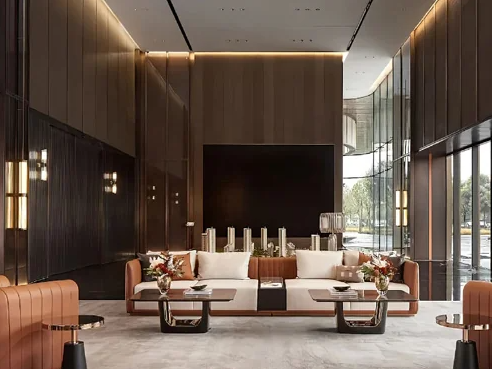
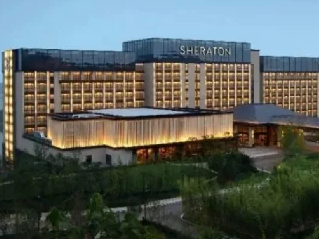
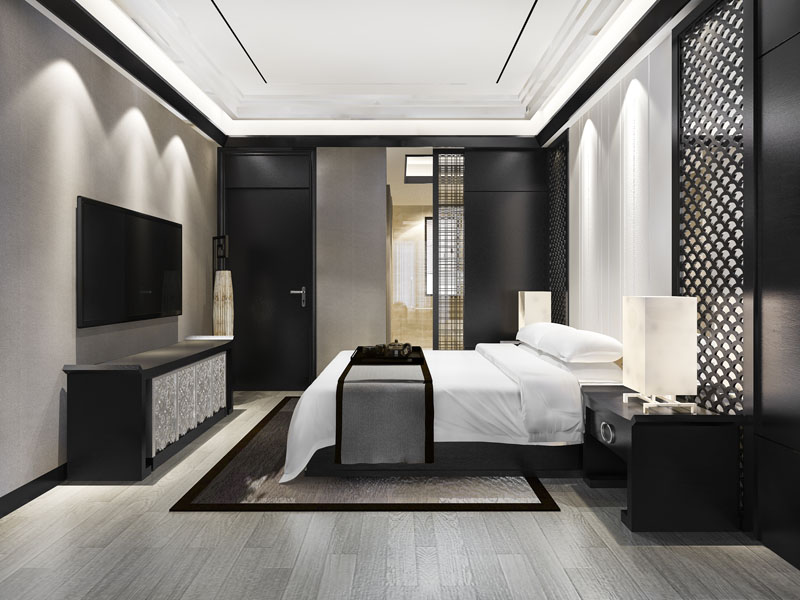
Our lighting systems are widely used in retail environments, hotel interiors, architectural contour lighting, and outdoor signage structures. Each application requires a different balance between brightness, flexibility, and durability.
In hospitality projects, for example, lighting must remain visually consistent while blending with interior design elements. In outdoor signage, visibility and weather resistance become more critical factors influencing product selection and system configuration.
Engineering Collaboration with Project Stakeholders
We regularly collaborate with contractors, designers, and electrical consultants to ensure lighting systems meet project expectations. This involves reviewing drawings, adjusting specifications, and providing technical recommendations based on installation conditions.
Through this process, we help align engineering requirements with real-world construction constraints, ensuring that lighting systems can be deployed efficiently without unnecessary redesign.
Conclusion
In our experience as a led strip supplier, technical expertise is not defined by a single product feature but by the ability to integrate electrical design, optical performance, and installation practicality into coordinated systems.
From early planning to final deployment, led strip supplier coordination ensures compatibility between components, while led strip supplier support during implementation helps maintain consistency across complex lighting environments.
This system-oriented approach enables us to support diverse commercial and architectural lighting projects with stable engineering outcomes.