For large commercial lighting projects, color consistency is often one of the first quality requirements discussed with suppliers. A hotel, retail store, office building, or architectural installation may use hundreds or thousands of meters of LED strip lighting, and even small differences in color temperature can become visible once products are installed together.
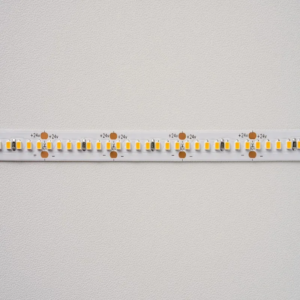
The challenge becomes more complex when customers place repeat orders at different times. A second production batch that looks slightly warmer or cooler than the original installation can affect the overall visual effect and create additional replacement costs.
A reliable LED lighting manufacturer needs more than standard production equipment to solve this issue. Maintaining consistent color performance requires careful LED selection, controlled manufacturing procedures, and accurate quality management throughout the production process.
Why Bulk LED Strip Orders Require Strict Color Control
LEDs are manufactured through semiconductor processes, and small variations can naturally occur between individual LED chips. These differences may influence factors such as brightness, wavelength, and perceived color appearance.
For individual lighting products, minor variations may not always be noticeable. However, large installations create a stronger visual comparison. A continuous lighting line can reveal differences immediately if some sections produce slightly different color temperatures.
This issue is particularly important in applications where uniform illumination is part of the design objective. Linear ceiling lighting, display lighting, and decorative architectural features often require a seamless appearance across the entire installation.
Bulk purchasing also introduces another challenge: repeatability. Project owners and distributors expect replacement products or future orders to match existing installations. Without effective manufacturing controls, maintaining the same lighting appearance across multiple production runs becomes difficult.
How LED Binning Creates More Uniform Lighting Output
Binning is a classification process used by LED manufacturers to organize LEDs according to measured characteristics. Instead of combining LEDs with different output properties randomly, manufacturers separate them into groups with similar performance.
For LED strip lighting, binning helps control color consistency by ensuring that LEDs used within the same product series come from appropriate color categories. This reduces visible differences between individual strips and improves uniformity across larger installations.
The binning process typically considers characteristics related to color output and brightness. By selecting LEDs from suitable bins, manufacturers can produce lighting products that better match specific color temperature requirements.
However, binning alone does not guarantee consistent results. The process must be supported by accurate inventory management and production tracking. If different LED batches are mixed without proper control, color variation may still occur during manufacturing.
What Happens Inside a Factory to Prevent Batch Color Variation
After LED selection, manufacturers must maintain consistency throughout assembly and testing. The production process includes multiple checkpoints where quality control can influence the final lighting result.
Material management is one important stage. Factories need to track LED sources, components, and production batches carefully so that the same product specifications can be maintained over time.
Assembly consistency also affects the final appearance of LED strips. Factors such as component placement, manufacturing settings, and production procedures need to remain stable to prevent differences between batches.
Testing before shipment provides another layer of verification. Finished products are checked to confirm that they meet required performance expectations before being delivered to customers.
Maintaining reliable LED strip production requires consistent control over materials, manufacturing procedures, and inspection standards. At Aiyu, we integrate these elements into our production workflow to support stable lighting quality for customers managing ongoing projects and repeat orders.
Why Production Repeatability Matters for Long-Term LED Supply
For businesses purchasing LED products in large quantities, supplier selection is not only about the specifications of a single order. It is also about whether the manufacturer can reproduce the same product quality over time.
A lighting distributor may need additional inventory months after the first shipment. A contractor may require replacement strips that visually match an existing installation. A brand may need confidence that its private-label products maintain consistent quality across production cycles.
A professional LED lighting manufacturer builds repeatability through documented processes and controlled production systems. This reduces uncertainty when customers expand projects or continue purchasing the same product line.
Manufacturing experience also helps identify potential sources of variation before they affect customers. Instead of addressing color differences after delivery, experienced suppliers focus on preventing problems during development and production.
Maintaining Consistent LED Strip Lighting Through Professional Manufacturing
Color temperature consistency in LED strip lighting is the result of multiple connected processes rather than a single quality check. Effective binning provides the foundation, while careful material control, stable production methods, and final inspection help maintain reliable results.
Consistency in LED strip lighting production comes from disciplined control across the entire manufacturing workflow. At Aiyu, we pay close attention to material selection, production management, and inspection procedures to support stable color performance for commercial projects and ongoing supply requirements.
Selecting the right manufacturing partner involves looking beyond product specifications alone. A factory’s ability to maintain repeatable processes directly influences whether each batch can achieve the same lighting appearance and meet the expectations of long-term customers.